
By Kelly Stenka
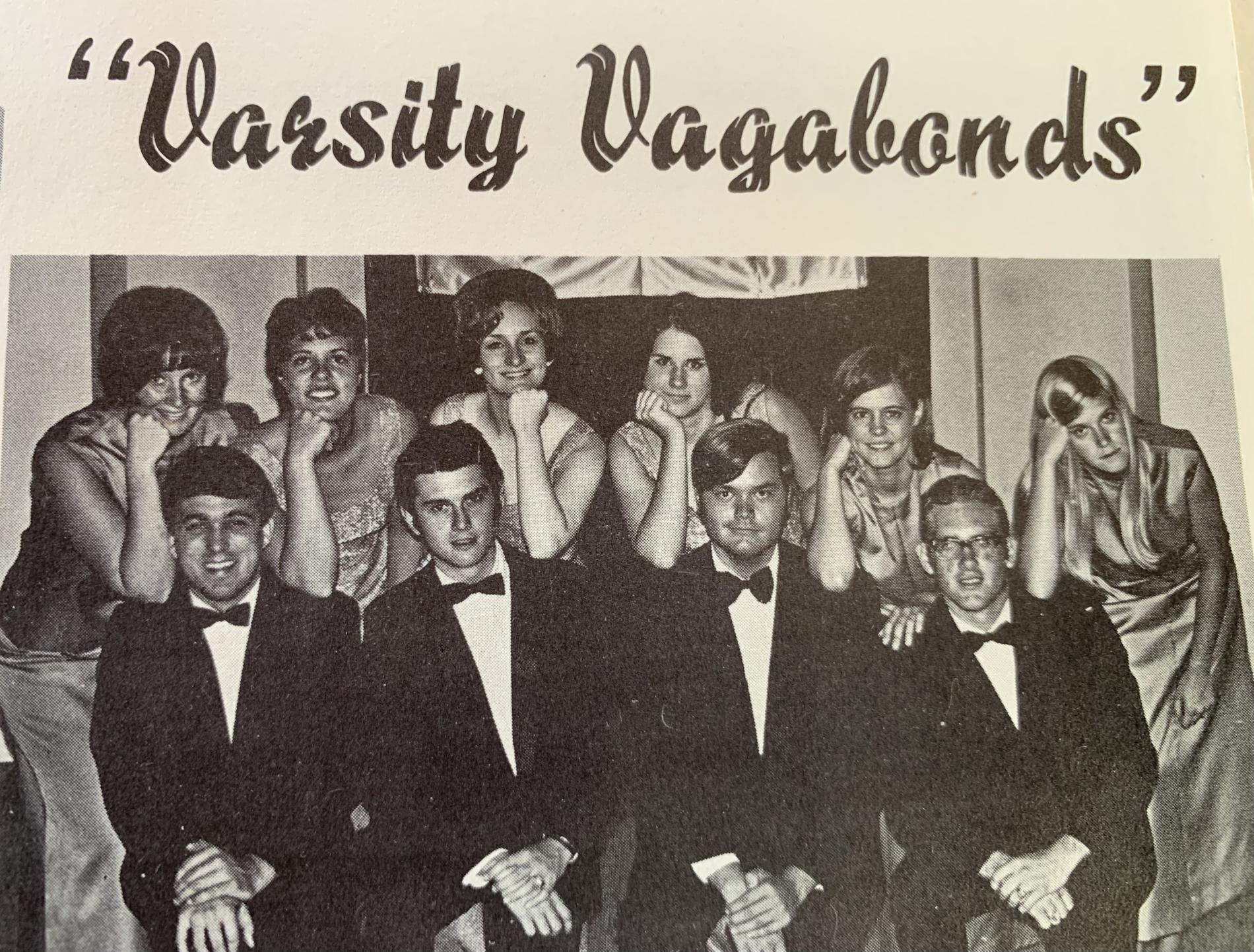
For a group of Doane students from the small town of Crete, Nebraska, the chance to perform for American troops overseas was an exciting and unexpected adventure. Glenn Peterson, their choral director, saw an opportunity to lift spirits through music and brought together a special group of singers and dancers — the Varsity Vagabonds — to take part in United Service Organizations (USO) tours during the 1960s. From military bases in Asia to the icy landscapes of Greenland and even stops in Crete, these students shared their talent and brought a little bit of home to soldiers serving far from their families.
They were not just students with a love for performance; they were ambassadors of morale. In the middle of global unrest, they brought laughter, rhythm and the comfort of familiar songs to American troops. In doing so, they found lifelong friendships and memories stitched together by applause, adventure and an unwavering sense of purpose.
Formed in the early 1960s by Peterson — affectionately known as “Uncle Pete” to his students — the Vagabonds were a
handpicked group of 14 to 18 singers drawn from the larger Doane Choir. While they performed regularly across Nebraska during the academic year, it was their USO tours that left the deepest impression.
The first tour, in 1963-64, took them to Greenland, Iceland and England — key U.S. military outposts during the Cold War, a time when tensions between the United States and Soviet Union were at a peak and America was mourning the assassination of President John F. Kennedy. Later tours in 1967 and 1969-70 took the group to Asia, where they performed for American troops stationed near the front lines of the Vietnam War. At a time when national support for the war was beginning to fracture and young soldiers faced daily danger, the Vagabonds offered a slice of home.
Now, decades later, the former Vagabonds still recall those whirlwind years with astonishing clarity — the costumes, the cracked jokes during practices, the weight of performing for soldiers who had not seen home in months and the bond — deep, unshakable — that still connects them today.
In conversations, the Vagabonds have reflected on their legacy, wondering if they may have been among the very first show choirs in the United States, even predating the Young Americans, who are widely credited with forming in 1962.
“We did not have a choreographer or a professor directing us in those early days,” one member recalled. “We would just head upstairs in the Conservatory and make something up — funny little skits or movements to go with our songs. It happened organically.”
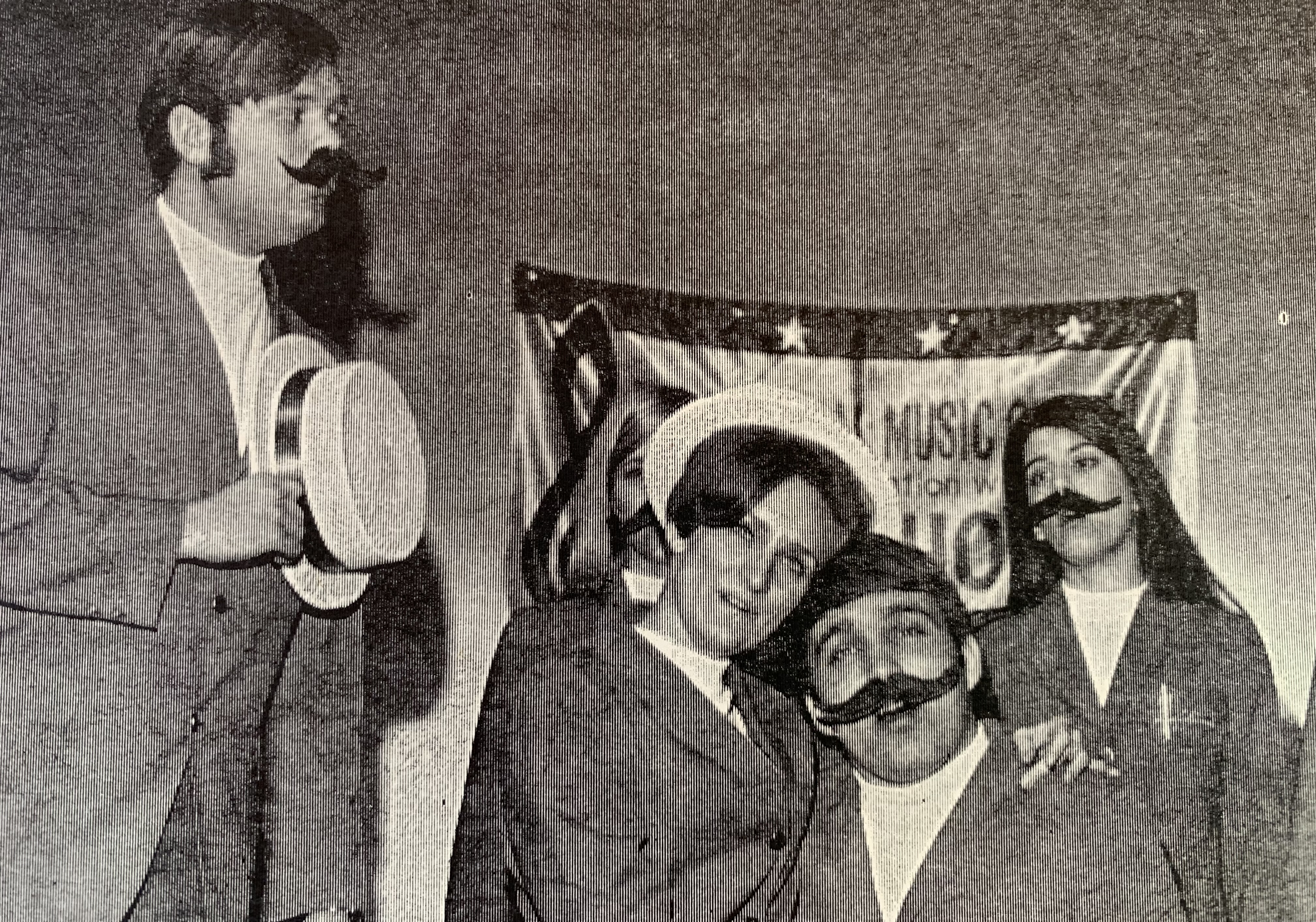
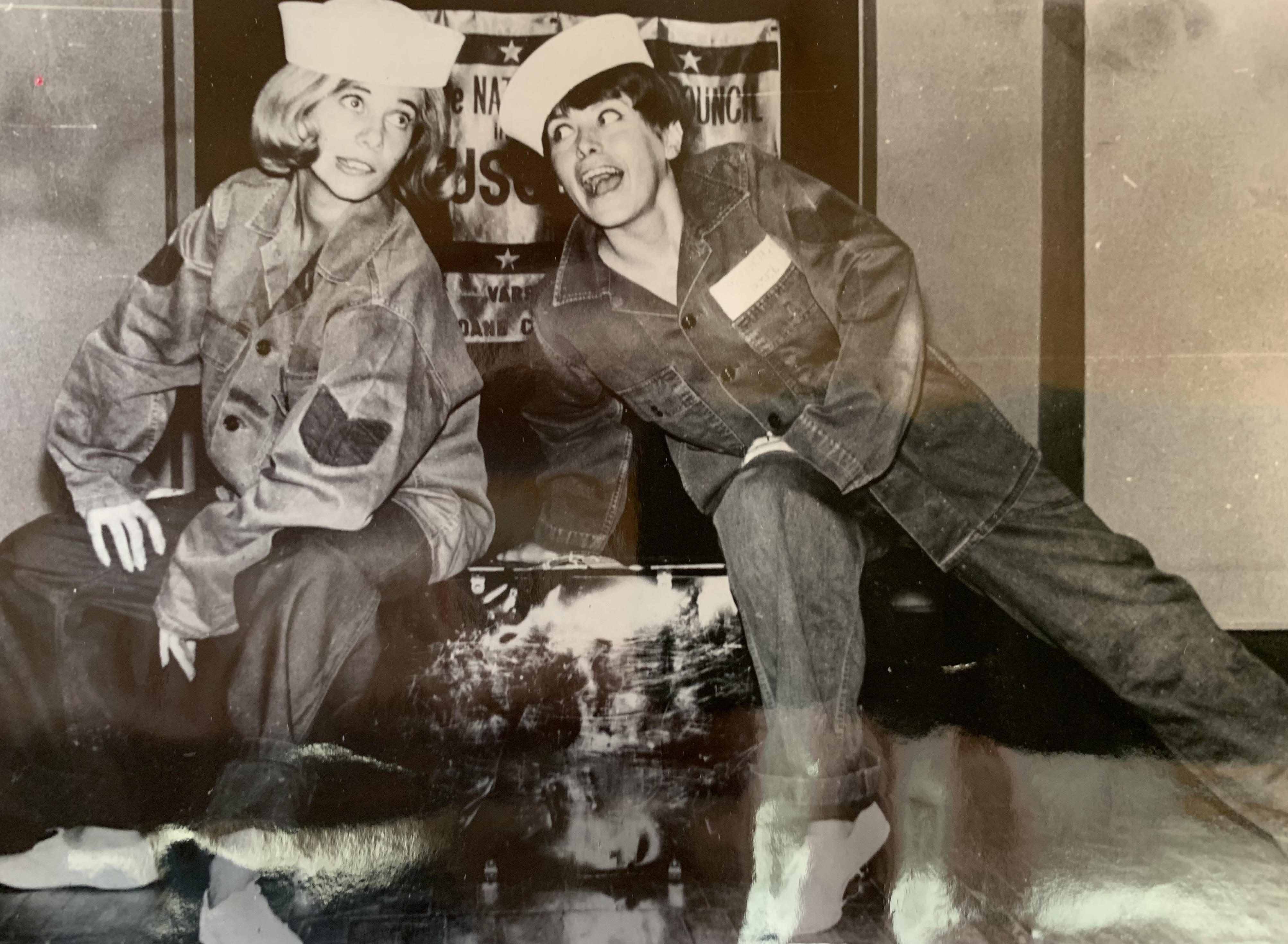
By 1968–69, when the group was selected for a USO tour, their performances had become more theatrical. Under
Peterson’s direction, the group began incorporating choreography and creative staging into their sets. One memorable number opened with performers pretending to get dressed on stage, transforming from disorganized chaos to a polished finale with women in red dresses and men in tuxedos.
For Lois Chab Weyers '67, the Vagabonds were more than a college performance group; they were a lifelong source of friendship and adventure. Now living in Green Bay, Wisconsin, Weyers fondly recalls participating in two USO tours: one in 1963 to the chilly northern reaches of Nova Scotia, and another in 1967 that took the group across Asia.
“I have so many memories of the travel and especially the people we traveled with,” she said. “I do not think I will ever forget them.”
One moment that stands out from the Asian tour involved performing on a battleship, flanked by two others on either side.
“We were in the middle ship, singing our hearts out, and the guys on the ships next to us were hooting and hollering from across the water,” Weyers recalled with a smile. “It was one of those surreal moments — you knew you were part of something special.”
Barbara Spencer Wettergren '67 was 21 when she embarked on her second USO tour with the Vagabonds. While the excitement of performing abroad left its mark, one moment in particular has stayed with her for decades. During their time in Japan, the group visited several military hospitals — many filled with young American soldiers who had been wounded in the Vietnam War. Some had been stabilized in field hospitals, transferred to hospital ships, and eventually brought to Japan for recovery. Others were preparing to return home, and some, Wettergren feared, might never leave
those hospital beds.
After their group performances, the Vagabonds were encouraged to walk through the wards, sit with the patients and offer what comfort they could. Wettergren remembers one young man most vividly lying alone under a tented sheet suspended above his body to protect his severely burned skin.
“He had his eyes closed, but when I approached, he reached out his hand,” Wettergren said. “I sat down and held it. I asked how old he was, and he said 19.”
He asked her to sing “Summertime,” a request that she struggled to finish through tears. “I have always wondered what kind of life he had after that — if he made it home, if he saw his family again. That moment … it changed me. It was the first time I truly understood the cost of war.”
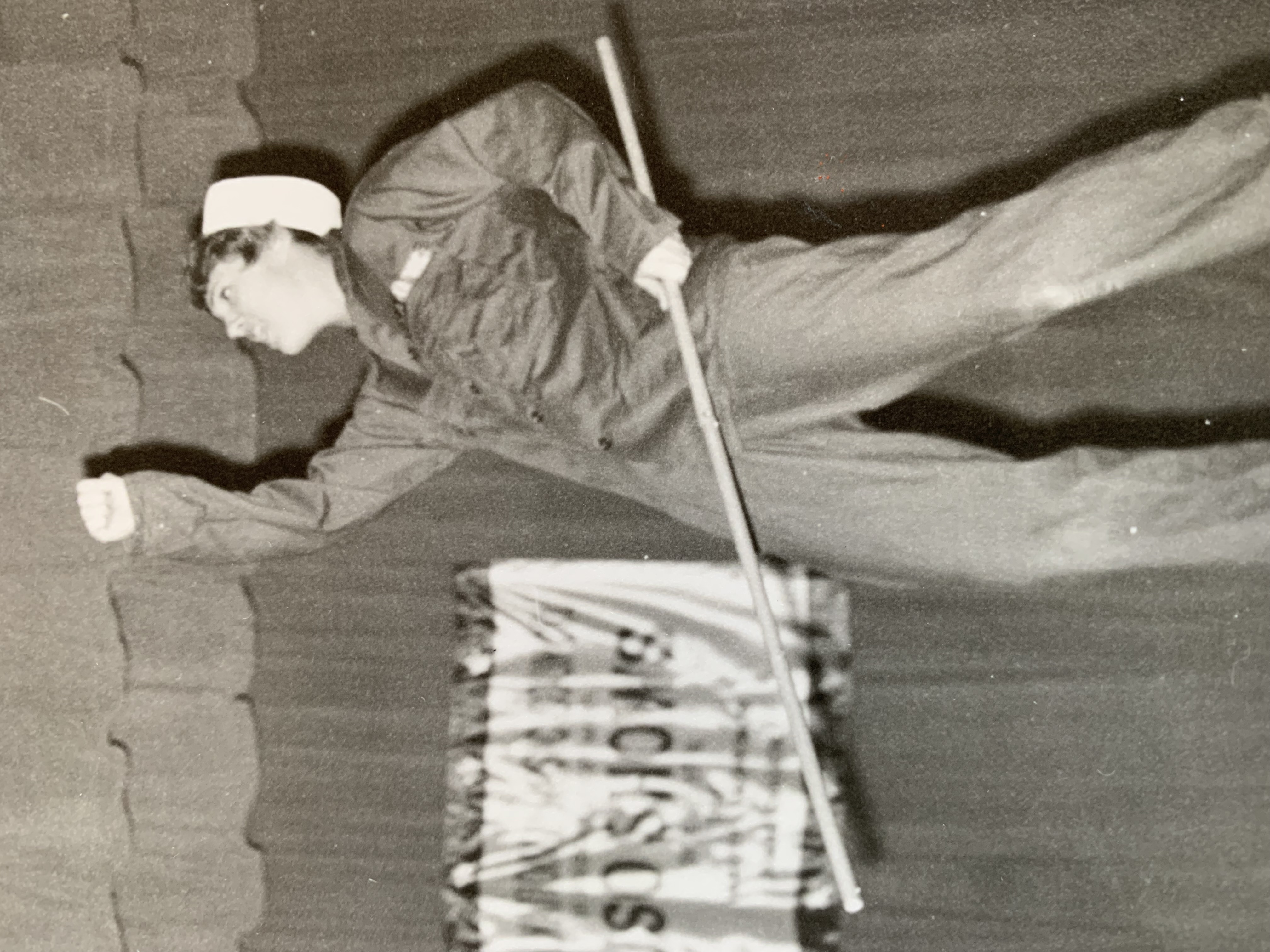
Rhoda Miller '70, a freshman from Crete who joined the Vagabonds in 1967, said: “Of all the experiences I had at Doane … being in the Vagabonds and doing the USO trips were by far the most fun and the most life-transforming. They literally opened the world to me.”
Reflecting on their time together, Jack Cahill '71 said, “When you look at the whole group and our leadership, just an amazing group of people who had an awful lot of fun while we were contributing in our own way. We sure had a lot of fun doing it.”
Calvin Hennig '64 was part of the Greenland tour and recalls the tension and surreal experience of performing at a missile control site during the Cold War.
“We were good, corn-fed innocent kids,” he said. “It was quite a reward for us to be there. That experience stays with you.”
The Vagabonds’ story is a reminder that even in difficult times, music and friendship can create moments of joy, hope and connection. For those who sang and danced their way across the globe, the echoes of their harmony still carry on.


