
Matt James '06 and the Future of Conservation
By Kelly Stenka
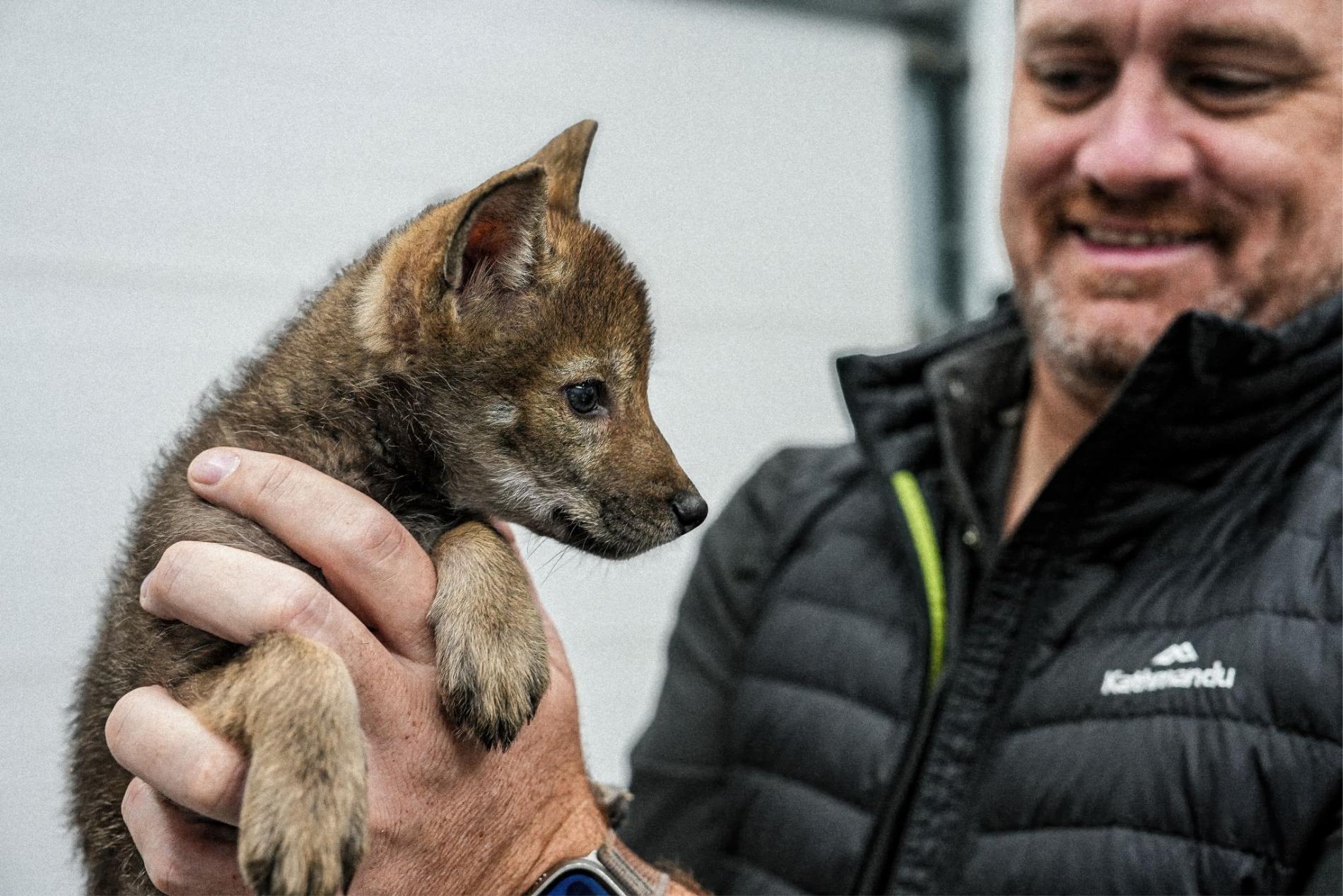
By the time Matt James graduated from Doane University in 2006, he had no idea he’d one day be holding three dire wolf puppies – brought back from extinction after 10,000 years – with his own hands.
James, the Chief Animal Officer at Colossal Biosciences, is part of a team leading the charge on one of the boldest scientific missions of our time: de-extinction. The company originally made headlines in 2024 with the return of the dire wolf, an iconic predator made famous by the popular book series and television show "Game of Thrones", and James has been at the center of it all. But how does a teenager know they want to go to college to become a chief animal officer? The short answer: They don’t – at least not in James’ case.
“I had no clue what I wanted to do with my life,” James said of his high school years. “I knew I didn’t want to be a vet, but that was about it.”
With a brother (Charles '03) already attending Doane, James chose the school out of familiarity. He enrolled as a biology and chemistry major, unsure where the road would lead. What he found was a place that encouraged exploration and gave him the freedom to try and fail.
“The liberal arts approach my mom encouraged really helped,” he said. “You don’t get pigeonholed. You can explore. And the professors at Doane were critical. That one-on-one attention at such a crucial juncture in my life made all the difference.”
Classes like ecology and genetics lit the initial spark. “That’s when I really started thinking about ecosystems, biodiversity and how we can study and understand nature better.”
After graduation, James pursued a graduate degree in wetland science and coastal ecology at Coastal Carolina University. But even there, he didn’t quite fit the mold of a traditional conservationist.
“I didn’t want to be a government biologist or the world’s leading expert on the smallest little species that nobody’s heard of. I wanted to do something much more engaging.”
So, naturally, he answered a Craigslist ad to train dolphins in Miami.
It paid $7 an hour.
James’ bold detour opened a door to a career in animal behavior and conservation. His dolphin training experience led him to St. Augustine, Florida, where he continued his work with dolphins. He caught the attention of ZooTampa who asked him if he could bring his knowledge and training expertise and apply it to their herd of elephants.
The enormous – literally and figuratively – opportunity to manage an elephant herd soon expanded to include a wide range of species. James found his stride working with zoos, where he admired animal populations. His passion led him to Zoo Miami, one of the largest zoos in the United States, where he served as general curator. There, he built out conservation and animal management programs – efforts he later continued at the Dallas Zoo. James was on an exciting and engaging path, always asking: What’s next?
Then the pandemic hit and that question took on a new weight.
“During that time, I started getting very introspective. I was, honestly, dissatisfied with the level of impact that I was having on the fight against biodiversity loss, and it made me wonder what other opportunities were out there.”
That’s when he connected with Ben Lamm, CEO of Colossal, who had an audacious idea: bring back the woolly mammoth.
James, ever the curious contrarian, responded with questions – lots of them.
“I was asking things like, ‘How else can these technologies be used? What does this mean for conservation?’ and Ben just said, ‘You’re asking the right questions. Why don’t you help me start this thing?’”
So began the work of a lifetime.
At Colossal, James oversees animal welfare, reproductive sciences and the application of genetic engineering and conservation technologies to protect endangered species. His team works on projects that sound like science fiction – until they aren’t.
These monumental efforts are to reintroduce lost genetic diversity to a species teetering on the brink of extinction. Take the dire wolf case. The extinct species was brought back not for its fame in pop culture, but to serve a real purpose: to support the endangered red wolf populations in the U.S. In the case of the dire wolf, James and the team at Colossal announced they also cloned four red wolves – the world’s most endangered wolf and the only one native to the U.S.
The work extends beyond de-extinction. The Colossal team is developing technologies to restore degraded ecosystems, enhance biodiversity and bring critical function back to fragile environments on a global scale.
Additionally, their efforts have uncovered countless technologies that have meaningful impacts to species on the brink of ex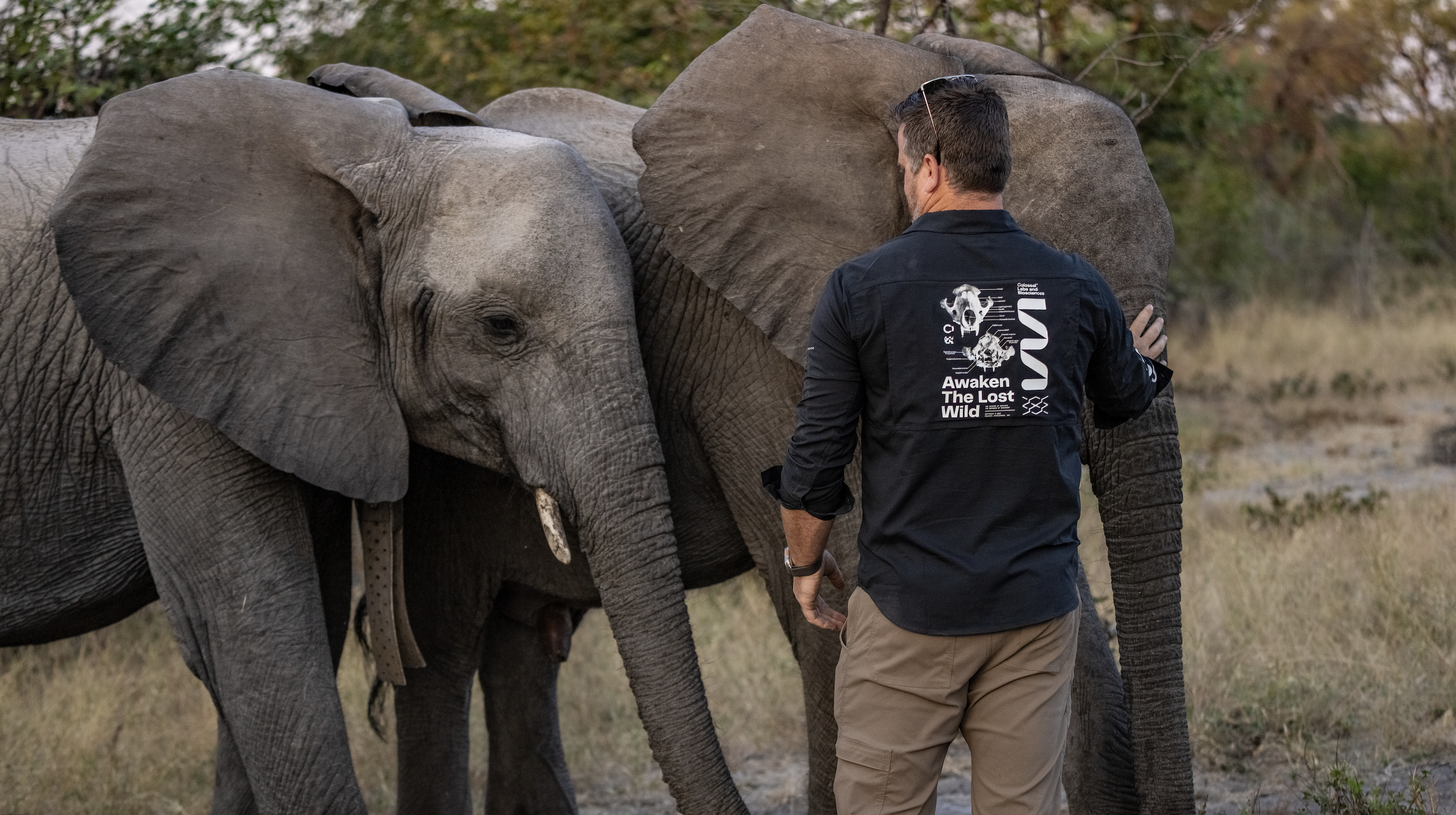 tinction today. With their efforts to restore the woolly mammoth, they were able to create a vaccine for elephants, protecting them from one of their leading causes of death – elephant endotheliotropic herpesvirus (EEHV).
James’ role is a mix of bold ideas, complex science and deep ethical consideration. But James doesn’t shy away from the moral questions. In fact, he welcomes them.
“We have to ask, what is the opportunity cost of not acting?” he said. “The status quo is rapid biodiversity loss. Some experts think we could lose 50% of biodiversity by 2050. The most unethical thing we could do is nothing.”
James’ day-to-day isn’t all genetics and genome-based. Along the way, he’s rubbed elbows with "Game of Thrones" author George R.R. Martin, "Lord of the Rings" director Peter Jackson and seven-time Super Bowl champion quarterback Tom Brady — all supporters of Colossal. James and members of his team have even met with U.S. Secretary of the Interior Doug Burgum to discuss how their groundbreaking technologies could help shape the future of conservation.
“It’s still very surreal. I don’t typically fanboy over much, but when you get in the room with some of these really intriguing people, it’s hard not to get star-struck,” James admits.
James likes to joke that his wife and friends keep him grounded. But when asked how he went from a small Nebraska campus to leading a global team of scientists, he’s humble and witty about the whole experience.
“I don’t know how I got here. I’m still figuring it out,” he laughed. “But what got me here was trying everything. Doane gave me that opportunity.”
He credits his experience in Delta Kappa Pi at Doane. Their high GPA standards, his social network on campus and the encouragement of professors Kate Marley, Ph.D., Russ Souchek, Ph.D. and Brad Elder, Ph.D., introduced him to a realm of new ideas and possibilities.
“That’s the beauty of a liberal arts education – it doesn’t trap 18-year-olds into thinking they have to be something before they’ve lived enough to know what that is.”
Now, he’s hoping today’s students embrace the same mindset.
“Try things. Do weird stuff. Take chances. Don’t fear failure,” he said. “When you realize failure leads to better opportunities, you’ll be more willing to take on risk. Now’s your time to try as many things as possible.”
And for all the surreal moments – like holding dire wolf pups or seeing years of science come to life – James says he’s still the student from Doane who just wanted to try something different.
Luckily for the world’s endangered species, he still is.


