
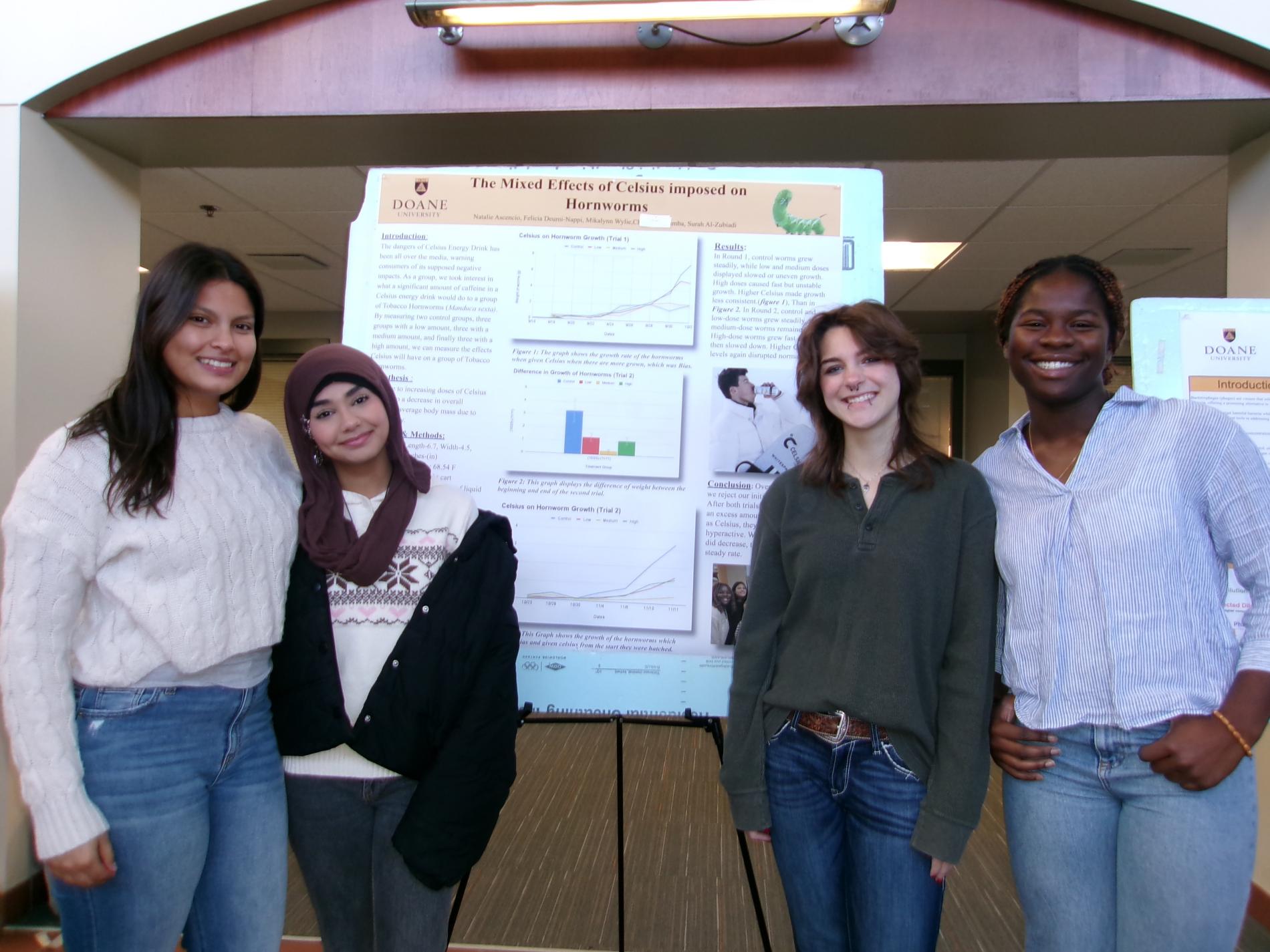
By Sara Hinds
Celsius energy drinks, pre-workout and sound have more in common than you think, which logically is zilch. But for Biology 110 (BIO 110) students at Doane University, it was their variable of choice to test on hornworms.
Students were divided into groups of four and spent the fall semester developing, running, rerunning and presenting two trials. BIO 110 is an introductory course, and for some students it marked their first time conducting research and having total control over the end result.
In high school science classes, students follow step-by-step instructions and reach the same conclusion. BIO 110, much like college in general, offers students freedom to make mistakes and forge their own future.
“This is the first time that I've really had the opportunity to explore some of my own ideas and really make that project my own,” Rylie Arens, a first-year student, said. “Brad [Elder, Ph.D., biology professor] told us at the beginning, ‘If you kill your worms, you're going to fail the project.’ And we're like, ‘What happens if we kill all our worms? What are we going to do?’ So I think that part kind of scared me a little bit, but overall, I thought it was a really fun experience.”
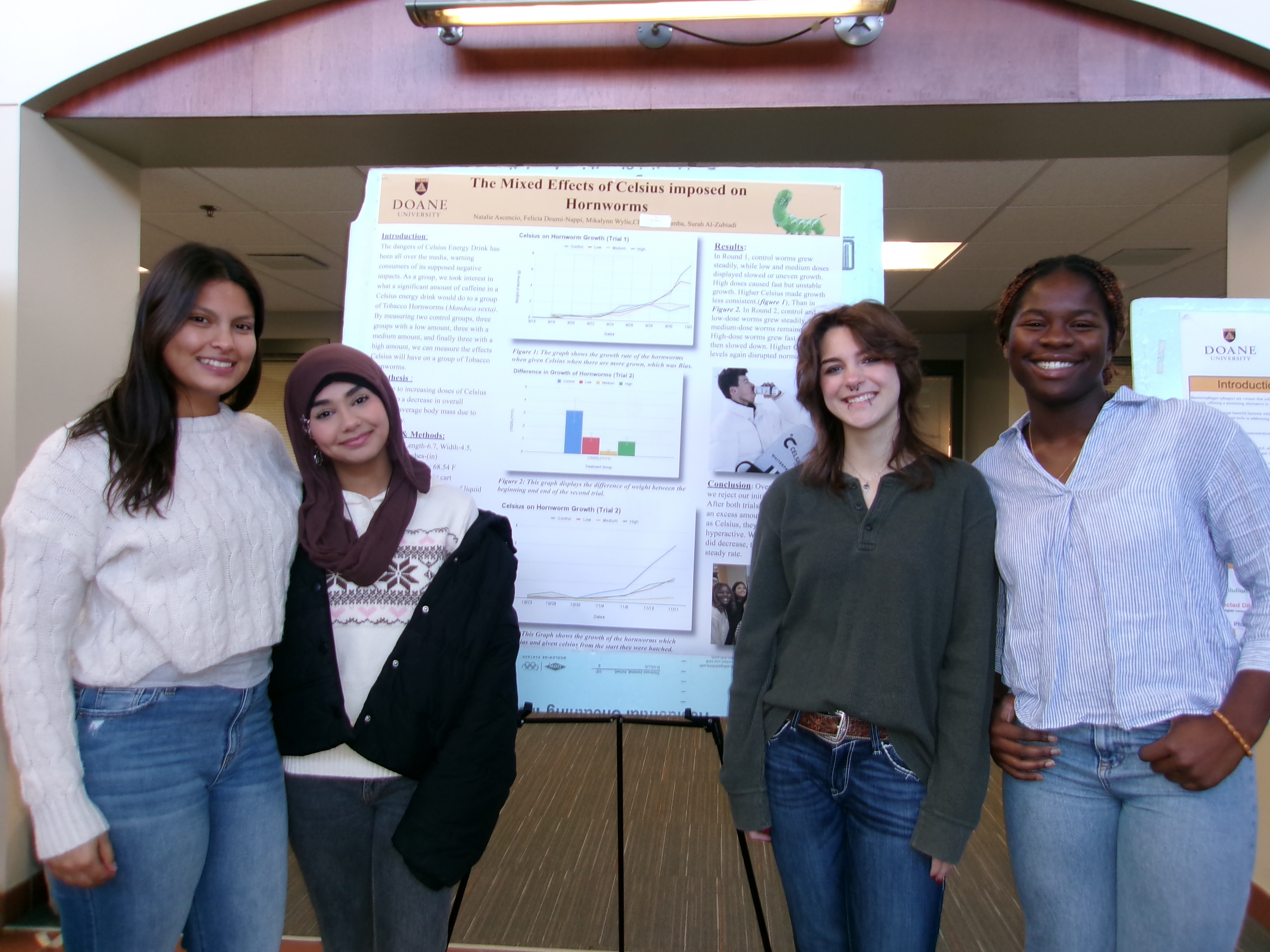
With freedom comes responsibility, and over the course of the semester, the students stepped up to take ownership of their experiments. They met outside of class time to weigh their worms, track data and tackle biases. And before they left for winter break, the groups presented their findings on posters in the university’s Nyrop Hall.
On display was more than tables and graphs, but a camaraderie among group members and an openness to the scientific process.
For many, BIO 110 is just the beginning. Plenty more laboratories, research classes and school will be required as they work toward medical school and a career founded on science. BIO 110 students expressed interest in everything from gynecology, veterinary medicine, cosmetics research and development, sports medicine to children psychology.
“It's a really great way to build a relationship with science, because you don't necessarily have to be good at science to do this,” Surah Al-Zubiadi said of BIO 110. The first-year student continued: “And honestly, it can foster a love for something you never knew you had. It can help you find a new passion, and it can get you to where you want to be without the stress.”


